
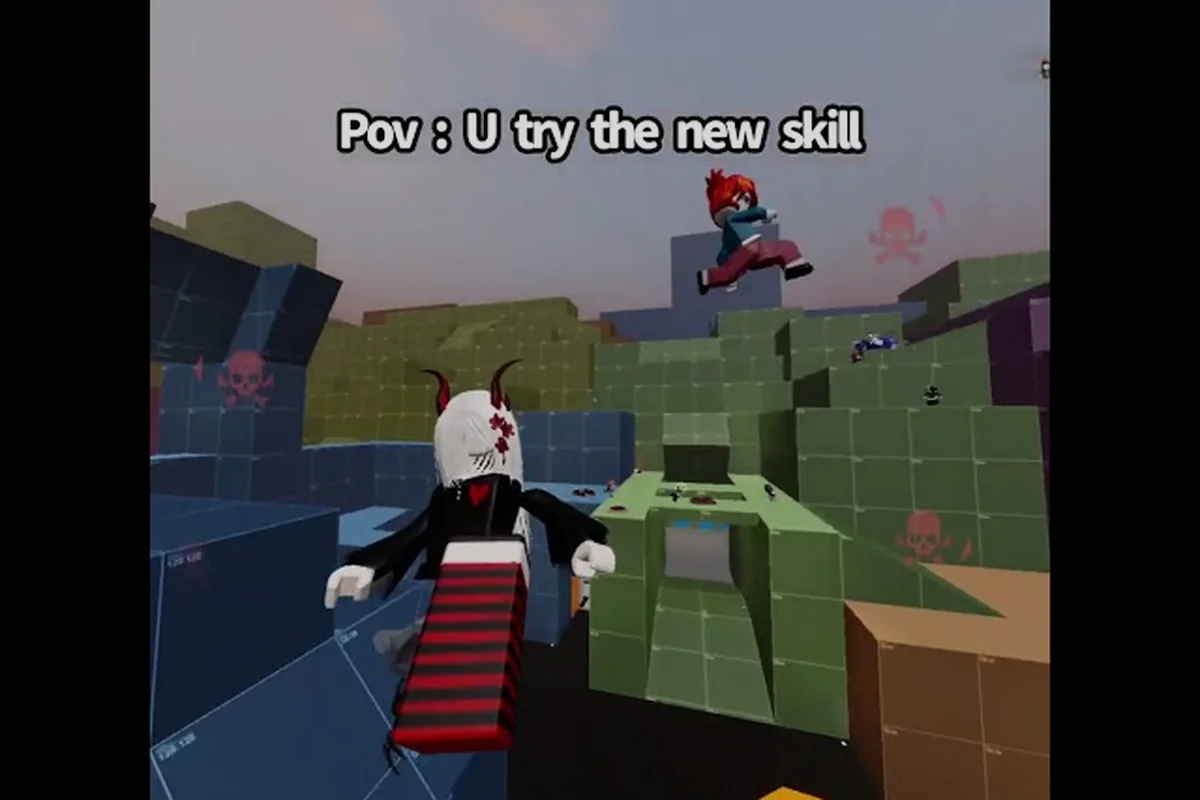
Evade is a Roblox multiplayer horror-survival parkour game built on a simple but punishing loop: run, hide, and survive while a rotating roster of Nextbots hunts you through a series of rounds. This Evade gameplay guide focuses on the mechanics solo players actually touch every match — sprint management, stamina recovery, Nextbot read patterns, and the short recovery window between rounds. Whether your first run lasted ten seconds or the full round timer, the goal here is the same: give you a mental checklist for what to do, what to avoid, and what to practice so your average survival streak grows round by round.
For players looking to see the movement options in action, a detailed visual breakdown of dodge timing, i-frames, and stamina costs is available in the Evade Mechanics Breakdown video by WoW Questie, which demonstrates how spacing and directional inputs affect whether your evade successfully avoids damage or trades with an incoming hit.
Core Movement and Stamina Mechanics
Every survivor in Evade shares the same base movement kit, and understanding that kit is the foundation of any solo survival guide. Your character has a finite Stamina pool that drains whenever you sprint, slide, or vault. When the bar hits zero, you slow to a forced walk and your screen greys out briefly, which is functionally a death sentence against most Nextbots. Community testing consistently shows that sprinting constantly is the single biggest mistake new solo players make, because it dumps stamina faster than the bar refills, and once you're caught flat-footed, the Nextbot closes the gap before you can react.
| Stamina State | Movement Speed | Visual Cue | Solo Strategy |
|---|---|---|---|
| Full Bar | 100% sprint cap | Bar glows bright | Open distance, take sharp corners |
| Mid (40-60%) | 95% sprint cap | Bar holds green | Chain short bursts, stop to listen |
| Low (10-30%) | 90% sprint cap | Bar flickers amber | Walk, hide, regenerate |
| Empty (0%) | Forced walk | Screen grey pulse | Stand still behind cover, wait it out |
The bar regenerates passively, but only when you're not sprinting. Walking and standing still both refill stamina, and standing still behind an obstacle refills it faster than walking in the open because you're also denying the Nextbot line of sight. A useful rule of thumb reported by players: keep your stamina bar above 30% at all times unless you have a clear sightline to a safe room or locker. That 30% cushion is the difference between a clean escape and a guaranteed tag.
Sprinting itself costs stamina per second, not per tap, so mashing the sprint key does not save you anything. Holding it down drains the bar in roughly four to five seconds of continuous sprint for a base character, which sounds generous until a fast Nextbot rounds a corner and you suddenly need a second burst to break line of sight. Learning to release the sprint key a half-second early and coast on walk speed is one of those small habits that separates a ten-second death from a full-round clear.
Sprint Bursts and Recovery
The most efficient way to traverse a map is to sprint in short, deliberate bursts rather than holding the key down. A common solo pattern looks like this: sprint for two to three seconds, release for one to two seconds, then sprint again. The release window is long enough to start refilling stamina but short enough to maintain most of the momentum from your last burst. Over a full round, this rhythm gives you roughly the same travel distance as a constant sprint while keeping your stamina bar from emptying in critical moments.
Where many new players go wrong is treating stamina like a health bar they should always spend down. In practice, Unused Stamina is your emergency tool. If you finish a round with stamina still in the bar, you didn't waste it — you kept it as insurance against a chase. Survivors who top the leaderboard almost always finish with at least 20-30% stamina remaining, because they understood that a Nextbot could respawn or switch targets at any moment.
Nextbot Chases and How to Read Them
Every Nextbot in Evade has a movement speed, a tracking behavior, and one or more audio cues. You don't need to memorize the full Nextbots list to survive solo, but you do need to know how to react when one is on your tail. The first rule of how to avoid nextbots is to never assume a Nextbot is targeting someone else just because it ran past you. Many Nextbots have an "aggro swap" that pulls them toward the nearest visible player after a fixed timer, which means standing still in the open while watching another survivor run is a common way to die without ever seeing the threat.
| Nextbot Type | Speed | Key Cue | Solo Counter |
|---|---|---|---|
| Walker | Slow (walk pace) | Footstep audio | Walk backwards around corners |
| Runner | Fast (sprint pace) | Music swell | Cut through side rooms, lose sight |
| Teleporter | Variable | Visual flicker | Stay in lit rooms, watch the floor |
| Lurker | Slow but tracks | Whisper audio | Hide in lockers until it passes |
The "cut through side rooms" strategy is worth explaining in detail. Most Evade maps are built as a central spine of long corridors with side rooms branching off every 30-50 meters. When a fast Nextbot is chasing you down a corridor, your instinct is to keep running forward, but the smarter play is to break line of sight by ducking into a side room, closing the door (if the map has door props), and walking quietly until the Nextbot passes. Doors don't always stop a Nextbot, but they frequently reset its aggro, which buys you a full reset of the chase.
Audio cues are equally important. According to community data, almost every Nextbot plays a unique sound loop that intensifies as it gets closer. The trick is that the audio volume scales with distance, so when the music first becomes audible, you have roughly two to three seconds to find cover before the Nextbot enters your line of sight. Solo players who wear headphones and listen for that audio ramp tend to survive first encounters far more often than players who rely on visual confirmation alone.
Line of Sight and Break Points
Nextbots in Evade track by line of sight first, sound second, and "last known position" third. Breaking line of sight is therefore the single most effective counter to a chase. Walls, doorways, corners, and large props all count as line-of-sight blockers. The moment a wall or corner fully separates you from the Nextbot, it loses target lock and reverts to its patrol or wander path. From the Nextbot's perspective, you effectively vanished, and it will not turn around to double-check unless something re-aggros it.
This is where many solo players waste their stamina. They break line of sight, keep sprinting, and end up re-entering the Nextbot's patrol path two corridors later. The disciplined move is to break line of sight, stop sprinting immediately, walk to a different section of the map, and only resume sprinting once you're certain the chase is over. The "stop sprinting" half of that sentence is what most players skip, and it's the half that keeps their stamina bar healthy for the next encounter.
Round Structure and the Recovery Window
A full Evade match is built from multiple rounds, each lasting roughly three minutes, and the time between rounds is one of the most underused parts of the game by new solo players. When a round ends, every surviving player gets a short intermission in a safe hub area where Nextbots cannot enter. This is the moment when you reset mentally, check your stamina, plan your next route, and — if you're playing with bots or randoms — observe which Nextbots are queued up for the next round.
| Phase | Duration | What Solo Players Should Do |
|---|---|---|
| Round Active | ~3 minutes | Survive, hide, learn map layout |
| Round End | 5-10 seconds | Stop moving, watch the round-end screen |
| Intermission | 15-30 seconds | Plan route, restore stamina fully |
| Next Round Start | 3-5 seconds | Hold position until first Nextbot audio cue |
The intermission is also when your stamina bar refills to 100% automatically, so the question of what to do after first round is mostly about using that downtime well. Stand still, let the bar fill, and pick a starting position for the next round. A common mistake is to start sprinting the moment the intermission ends, which means you enter the new round with low stamina and a Nextbot already in your face. The disciplined solo player walks out of the hub, listens for the first Nextbot spawn cue, and only then begins moving.
If you died in the previous round, you'll respawn at the start of the next one, but you won't have the intermission to plan — you'll spawn directly into the active round. That makes your first ten seconds even more important, because the round timer has already started and a Nextbot may already be mid-chase on another player. Sticking to walls, walking, and listening are the three habits that keep you alive long enough to figure out which Nextbot is active and where it's heading.
Map Layouts and Memorization
Every map in Evade has a fixed layout, and memorizing that layout is the long-term payoff that turns a beginner into a consistent survivor. Players who know the safe rooms, the locker spawns, and the side-room shortcuts can plan escape routes before a Nextbot ever sees them. According to community data, players who have memorized two or more full maps have noticeably higher average round survival than players who queue into random maps every match, because the layout itself becomes a tool you can deploy under pressure.
You don't need to learn the entire map in one session. A practical approach is to pick one map, queue into it five or six times, and focus each run on a different section: round one, learn the safe rooms; round two, learn the locker spawns; round three, learn the side-room shortcuts. By the fourth or fifth run, the map's spine is muscle memory, and you can react to a Nextbot chase without consciously thinking about which direction to run.
Stamina, Health, and In-Round Items
Beyond stamina, Evade has a small set of in-round items and pickups that solo players can use to extend their survival. The most common is the Whistle, which emits a sound at a distant point on the map and briefly distracts certain Nextbots. The whistle is a great equalizer in solo play because it lets you create space without spending stamina, but it only works on Nextbots that respond to audio — some variants ignore it entirely, which is why you should always keep a stamina reserve even after throwing a whistle.
| Pickup | Effect | Stamina Cost | Best Use Case |
|---|---|---|---|
| Whistle | Distracts audio-tracking Nextbots | None | Break a chase, save stamina |
| Medkit | Restores a small amount of HP | Walking only | Recover after a near-miss hit |
| Speed Boost | 3-second sprint buff | Triggers on use | Final dash to safe room |
| Flashlight | Reveals Lurker-type Nextbots | Held while walking | Map sections with low light |
The Medkit and Speed Boost are situational but powerful. A medkit lets you recover from a glancing hit that would otherwise end your run, but you must stand still for a few seconds to use it, so only pop it when you have full cover. The speed boost is the opposite: it's a one-shot sprint buff that lets you close the last ten meters to a safe room when a Nextbot is half a second behind you. Combining a whistle with a speed boost — distract, then dash — is one of the highest-value solo combos in the game.
Item Priority in Solo Runs
If you spawn near multiple pickups, the order you grab them matters. The whistle is almost always the best first pickup, because it's the only one that gives you a stamina-free escape. The speed boost is second, because it pays off immediately in any chase. The medkit is third, because you can't use it under pressure and the round will likely hand you another one later. The flashlight is last, because it only helps against a specific Nextbot class and most maps have enough ambient light to see Lurkers without it.
Frequently Asked Questions
How long does a single round in Evade last?
Each active round runs for roughly three minutes, with a short intermission in between. The intermission is your stamina refill window, so stand still and plan your next route instead of running out of the hub as soon as the timer resets.
What should I do after my first round ends as a solo player?
Use the intermission to refill your stamina bar, pick a starting position on the map, and listen for the first Nextbot audio cue before you start moving. The question of what to do after first round is mostly about not sprinting out of the hub at full speed, because you'll arrive at your spawn with low stamina and a Nextbot already mid-chase.
How do I avoid Nextbots when I'm playing alone?
Break line of sight at corners and side rooms, stop sprinting the moment you break visual, and use audio cues to detect chases two to three seconds before you see the threat. The core rule of how to avoid nextbots is that line of sight and sound together give you far more warning time than vision alone.
Does sprinting constantly help me survive longer?
No, sprinting constantly drains your stamina and leaves you flat-footed when a Nextbot rounds a corner. The solo survival guide rule is to sprint in two-to-three-second bursts, release for one to two seconds, and never let your bar drop below 30% unless you have a clear safe-room route.
Where can I learn more about the individual Nextbots in the game?
The full roster, audio cues, and aggro behavior for every Nextbot is documented in the Evade Nextbots list. Pair that reference with this Evade gameplay guide and you'll have a complete picture of how each chaser behaves and how to counter it in solo runs.