
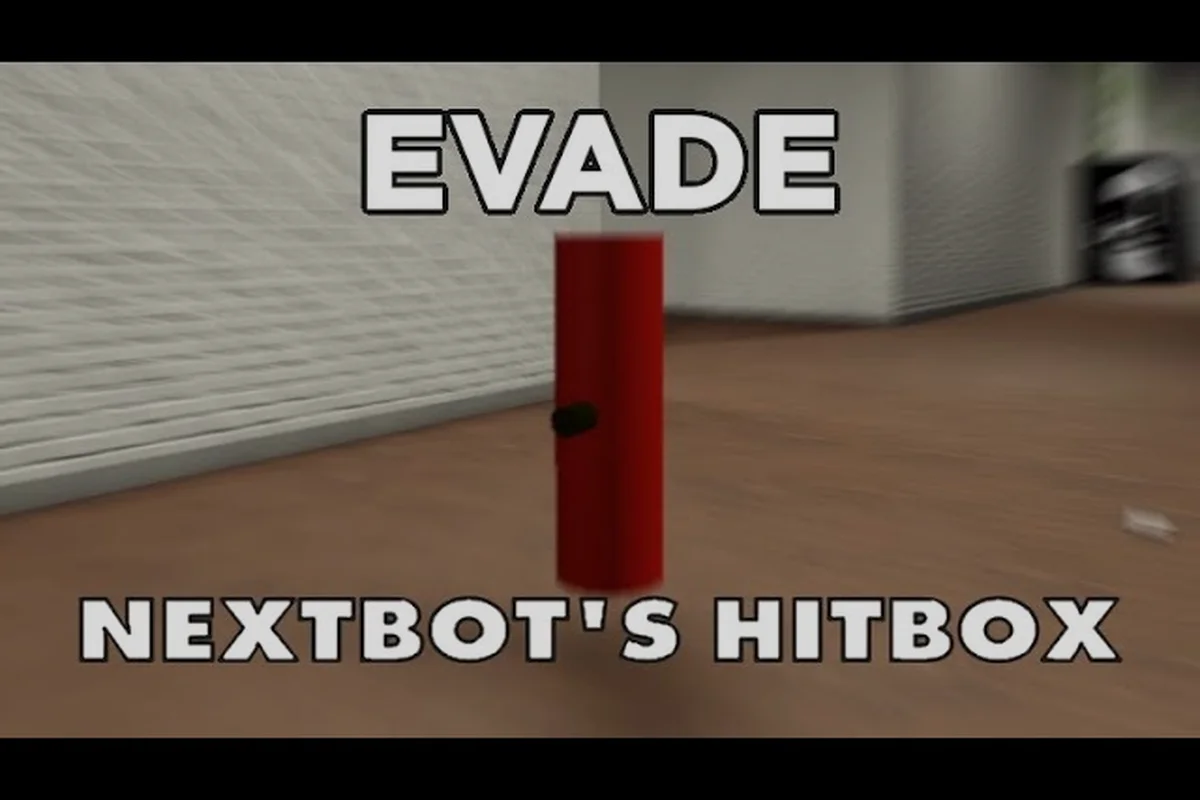
Most Evade runs die because runners panic, sprint flat-out the moment they hear the chase audio, and arrive at a wall with empty stamina. Learning how to escape nextbots in Evade is really about controlling three resources at once: stamina, line of sight, and map knowledge. Once those three habits are wired in, the difference between a 30-second wipe and a clean 3-minute survival becomes predictable.
This guide focuses on the chases that actually end runs in 2026 — the standard Angery Munci rush, the Lurking slow creep, and the Vine Dog sprint loop — plus the supporting cast of Bobo, Trollge, and the meme round bots. Stamina-safe routes, door delays, and chase-breaking plays are all broken down so a solo or squad runner can apply them on the next match.
Core Escape Principles Every Runner Should Know
The first thing to internalize is that Evade is not a pure-speed game. Nextbots have higher top speed than players in a straight sprint, so a flat dash never works. Every escape is a sequence of: regen stamina while visible → break line of sight → relocate to a known hide → repeat. Runners who skip a step burn stamina and end up cornered.
The Three Resources You Must Track
| Resource | What It Does | When It Spikes | Smart Habit |
|---|---|---|---|
| Stamina | Powers sprint and most abilities | Sprint, double-jump, dodge | Never drop below 25% before turning a corner |
| Line of Sight | Tells nextbots where to chase | Open rooms, rooftops, long halls | Break LoS behind a wall, not in a dead end |
| Map Knowledge | Lets you pre-plan the route | New map, new event stage | Memorize two safe loops per map |
These three resources interact. Cutting a corner to break line of sight costs stamina; using a door to break line of sight saves stamina but spends a global cooldown. Learning to swap which resource you spend is the real skill.
Why Panic Sprinting Fails
A panicked runner burns stamina in the first 4-6 seconds, hits zero at the worst possible moment, and gets cornered. The community calls this the stamina cliff — the moment your bar empties right as a nextbot closes the gap. The fix is simple but counterintuitive: when the chase audio first hits, slow down to a walk for half a second, then sprint with intent. That tiny pause gives the stamina bar room to recover a small amount before the real sprint starts, and it also helps you identify which direction the bot is coming from. According to the Nextbots wiki entry on the Evade Fandom, nextbots path toward your last known position when line of sight is broken, which means a smart pivot is more valuable than raw sprint speed.
Escaping Angery Munci in Evade
The Angery Munci chase is the single most common early-round kill in Evade. It is the bot that teaches new players the stamina cliff because Munci is fast, predictable, and relentless. A solid Evade munci guide is essentially a stamina-management guide.
What Makes Munci Dangerous
| Attribute | Behavior | Counter |
|---|---|---|
| Speed | Slightly above player sprint | Doors, stairs, verticality |
| Audio cue | Low growl, easy to track | Use it to time your sprint window |
| LoS behavior | Holds last seen position briefly | Break LoS, count to 2, then move |
| Weakness | Stair climbs and tight U-turns | Route through 2-3 room pivot points |
Munci is the cleanest example of the universal rule: nextbots respect line of sight but not stamina. Break the visual, wait one heartbeat, then take a different path. If you sprint straight away from Munci, the chase ends in 6-8 seconds. If you pivot, hide, and pivot again, the chase ends in 30-60 seconds with a clean escape.
Stamina-Safe Route Templates
The routes below are designed for the most common Evade stage types (Rooftop, Hallway, Vertical), and they all share the same skeleton: regen zone → door → pivot → hide. The regen zone matters because Munci, Bobo, and Trollge all reset to their idle patrol when you vanish, giving you back any stamina the chase burned; the door is your LoS-break trigger since the bot cannot path through a closed door; the pivot is the actual point where you change direction by 90° or more, snapping Munci's last-seen memory to a wall instead of you; and the final hide spot must be a separate room the bot has no reason to re-enter, which is why hiding in the same room you pivoted in always fails on the next loop.
-
Rooftop loop: enter from the south stair, pivot at the AC unit, drop through the skylight, regen on the low roof, then re-enter from the opposite stair. Munci loses LoS at the skylight drop and has to re-path.
-
Hallway chain: run past door 1, duck into door 2, then exit via door 3 on the far side. Munci enters door 2, finds it empty, and the chain breaks the chase.
-
Vertical play: take the ramp up, jump the gap, and drop the far side. Munci sometimes falls on the drop, and the height change scrambles its pathing.
The deeper reasoning is that Munci's pathing is straightforward — it walks toward the last point it saw you. A pivot through a doorway or over a ledge resets that point. A pure linear route gives the bot a straight line.
Surviving the Lurking Nextbot in Evade
The Evade Lurking nextbot plays completely differently from Munci, demanding a sightline-based counter instead of a stamina race. While Munci telegraphs its presence with loud chase audio, the Lurking bot moves at roughly walk speed and emits almost no footstep cue, so headphones-focused runners get caught flat-footed around blind corners in maps like Backrooms and Tower. Your survival tool is constant camera-pan scanning: pre-aim the next hallway, keep crosshairs on common ambush junctions, and never commit to a long sprint without first checking the geometry ahead, because once Lurking closes within melee range, the stun-lock kills you before stamina even matters.
Why Lurking Is So Uncomfortable
Lurking's slow movement makes runners overconfident. They walk because the bot is walking, and they forget that Lurking accelerates sharply once it has a clean visual. Lurking also has one of the longest LoS memories in the standard roster, which means breaking line of sight once is rarely enough — you need to break it twice and move through two different rooms.
Counter Patterns for Lurking
-
Double-pivot rule: after the first break, immediately make a second turn into a different room. Single pivots give Lurking a path back to you.
-
Hide, don't run: Lurking walks past closed rooms if you stay silent inside. A bathroom stall or a closet beats a hallway dash.
-
Use a teammate as bait: in squad play, send one runner to draw Lurking into a known corner while the squad relocates. Lurking will commit to the bait because it has a long LoS lock.
-
Verticality denial: stay off rooftops and bridges. Lurking's pathing on vertical surfaces is one of the strongest in the roster.
For a deeper comparison against other slow-bots like Hongo and Remu, the Evade Remu tier list breaks down which slow chases are actually threatening and which are mostly cosmetic. Lurking lands in the dangerous half — slow but consistent — and is a real test of map discipline.
Escaping the Vine Dog Sprint Loop
Vine Dog is the most stamina-intensive chase in the standard rotation. Its sprint pattern is fast bursts followed by short pauses, which is the exact opposite of Munci's flat rush. A Vine Dog escape has to time the pauses.
Vine Dog Movement Pattern
| Phase | Duration | What Vine Dog Does | Runner Response |
|---|---|---|---|
| Burst 1 | 2-3 sec | Full sprint toward you | Sprint away, gain ground |
| Pause 1 | 1-1.5 sec | Slows to a walk | Slow down, regen stamina |
| Burst 2 | 2-3 sec | Reorients to last seen | Pivot, break LoS |
| Pause 2 | 1-1.5 sec | Loses momentum | Hide, count to 2, relocate |
| Cycle | Repeats | Pattern resets every 4-5 sec | Stay in cover during pause 2 |
The Vine Dog escape is all about the pause windows. Trying to sprint through the full cycle drains stamina by the second burst. Hiding through the first pause and sprinting through the second gives the bot a moving target it cannot catch.
Vine Dog-Specific Routes
Vine Dog hates tight spaces during its burst phase. A route that uses one doorway plus one stairwell cuts its speed in half. The community-recommended pattern on most maps is: sprint from the chase spawn, take the first door, drop one floor, take the second door, and settle into a hide. Vine Dog loses the trail at the second door because its reorientation logic is slower than its raw speed.
For runners who want to know which maps make this loop easiest, the Evade nextbots list sorts the standard roster by chase behavior, including the maps where Vine Dog is weakest; specifically, vertical-heavy arenas like the School and Mall maps let you chain two stairwell drops in under 12 seconds, which is the exact window Vine Dog's burst-phase reorientation fails to recover from, so its chase meter resets before it can close the gap again.
Bobo, Trollge, and the Meme Round Escapes
Meme round escapes work differently from standard chases. Bobo and Trollge are technically evade bobo nextbot and evade trollge nextbot chases, but they tend to spawn in special rounds where the entire map is reshaped. Standard hide-in-a-closet strategies often fail because the closet is gone.
Bobo Round Escapes
Bobo is a wide-area patrol bot. It does not sprint; it walks, and it covers ground. The counter is to stay above it on rooftops or below it in basement routes. Bobo's pathing is the most predictable in the meme tier, which means a runner who memorizes the patrol circle can pre-position outside it before the round even starts.
Trollge Round Escapes
Trollge is faster than Bobo but more predictable. Its tells are loud and its pathing is short — it commits hard to the closest visible runner. The counter is the opposite of Bobo: stay with the squad, never isolate, and use the squad as a moving LoS shield. A solo Trollge escape is brutal; a coordinated four-person escape is one of the easiest meme rounds to clear.
For a full ranking of which meme bots are worth chasing and which to ignore, the Evade Bobo tier breakdown ranks the meme roster against the standard chases. The takeaway: Bobo is mid-tier, Trollge is high-tier, and the truly rare meme bots (Obunga, Pingu) are usually only dangerous because of how the round is structured, not because of raw chase power.
Quick Reference: Standard vs. Meme Round Escapes
| Chase | Best Counter | Worst Mistake | Squad or Solo |
|---|---|---|---|
| Angery Munci | Pivot, door chain, verticality | Sprint straight away | Both work |
| Lurking | Double-pivot, hide, stay off rooftops | Relying on audio | Squad preferred |
| Vine Dog | Time the pause windows, use door + stair | Sprinting through full cycle | Both work |
| Bobo | Stay above or below the patrol line | Hiding in a known closet | Solo friendly |
| Trollge | Move with the squad, share LoS | Isolating from teammates | Squad required |
Squad Tactics and Chase-Breaking Plays
Squad play changes the math on every chase. A four-person squad has more stamina to share, more LoS options, and more bodyblocks. The downside is that four runners also create four times the audio and visual noise, which pulls chases toward the group.
Bodyblocking and Stamina Donation
A bodyblock is the most common squad play in Evade. One runner steps in front of a chasing nextbot, and the bot commits to the blocker for 1-2 seconds while the squad relocates. The blocker then drops back and the squad reforms at a new hide. The cost is one runner's stamina plus a few seconds of exposure; the reward is a clean reset for the whole squad.
The key rule is to never bodyblock a bot you cannot survive for at least 2 seconds. Munci, Vine Dog, and Trollge all hit hard enough that a bodyblock against them has to be timed to a stamina bar near full. Lurking and Bobo are safer bodyblock targets because their damage windows are slower.
Chase-Breaking Plays That Work in 2026
The following plays have been consistent across the 2026 patch cycle, based on community testing reported by players and the ESCAPING NEXTBOTS in Roblox Evade roundup video that walks through practical chase scenarios.
-
Door trap: drop a door behind you right as the bot enters LoS. The bot has to path around the door, which costs it 1-2 seconds. Two doors in a row usually breaks the chase.
-
Stair drop: jump down one flight during a Vine Dog pause. Vine Dog has to reorient at the bottom, and the drop damage gives you a small head start.
-
Squad split: send two runners left and two runners right. The bot commits to one pair; the other pair reforms at a hide.
-
Vertical bait: one runner lures the bot up a ramp, then drops off the side. The bot sometimes follows and loses time on the regen.
-
Last-second pivot: in a closed room, wait until the bot is one second away, then pivot through a side door. The bot overshoots and has to re-path.
For a broader look at how to chain these plays across multiple rounds, the Evade survival guide covers round-by-round stamina budgets and how to plan your loadout around the chases you are most likely to face. Layering the plays from this article on top of that round planning is the cleanest way to lock in consistent 3-minute survival.
Frequently Asked Questions
What is the fastest way to escape Angery Munci in Evade?
The fastest consistent escape is a two-pivot route: sprint from the chase spawn, take the first door to break line of sight, count to two, then pivot through a second door in a different direction. Munci's pathing resets at each break, and the chain usually ends the chase in 8-12 seconds. Pure sprinting rarely works because Munci's top speed matches a full player sprint, and stamina empties before the bot gives up.
How do I deal with the Lurking nextbot's slow creep?
Treat Lurking as a map-sightline bot, not an audio bot. Break line of sight twice in a row, hide in a closed room, and stay silent. Lurking's slow movement makes runners overconfident, but its long LoS memory means a single pivot is rarely enough. The double-pivot rule — break LoS, move through one room, break it again — is the cleanest counter in the standard rotation.
Are Bobo and Trollge worth fighting or running from?
Bobo is usually worth running from because its patrol circle covers most of the map and a direct confrontation is rarely a clean win. Trollge is worth fighting only in a squad. A coordinated four-person bodyblock and pivot can clear a Trollge round in under a minute, but a solo runner is almost always better off relocating to a vertical position and waiting the round out. Both are meme round bots, and the round timer is the real enemy.
Which nextbot has the easiest escape route in 2026?
Vine Dog is the easiest escape if you learn its pause windows, and Munci is the easiest escape if you learn door chains. Lurking is the most punishing because the LoS memory forces a longer commitment. The truly rare meme bots like Obunga and Pingu are mostly round-structure problems rather than chase problems, so the escape route is usually just surviving until the round ends rather than outrunning the bot.
How does stamina work during long chases in Evade?
Stamina drains on sprint, double-jump, dodge, and most abilities. It regenerates only when you are walking or standing still, and the regen rate is slower the moment you start sprinting again. A clean chase pattern is sprint for 3-4 seconds, walk for 1-2 seconds, then sprint again. Running flat-out the entire chase empties the bar in 8-10 seconds and leaves the runner cornered, which is the most common wipe pattern in early rounds.